

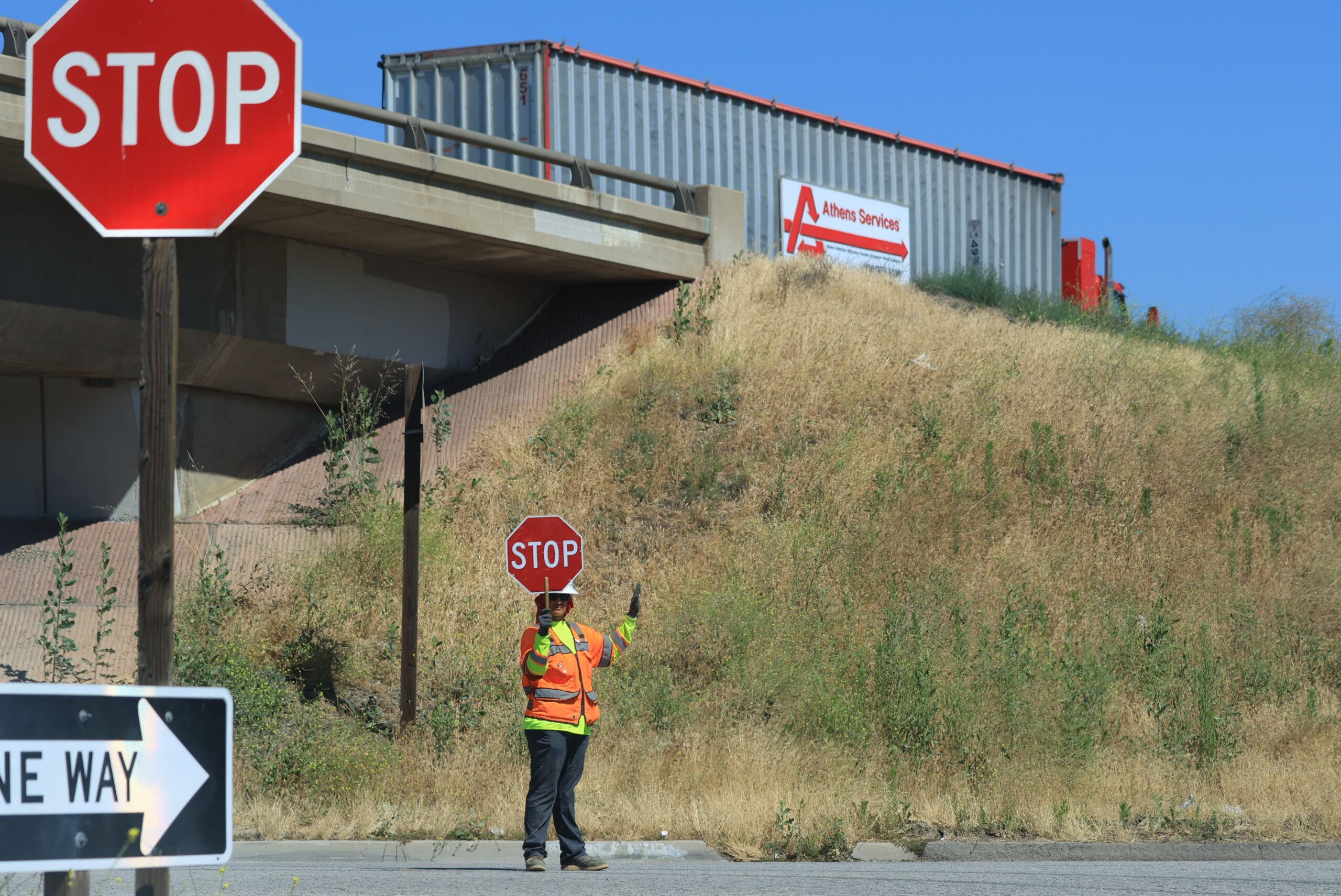
Here’s the short version: traffic control is one of the most accessible, well-regulated trades in Queensland, and the pathway from curious to qualified is shorter than most people expect. This guide breaks down what the role actually involves, what’s required for your traffic control licence, and how a traffic control course gets you there.
What Does a Traffic Controller Actually Do?
A traffic controller manages the safe movement of vehicles and pedestrians around construction, civil, and event sites. That means directing traffic with a stop/slow bat, following a Traffic Guidance Scheme, communicating clearly with the rest of the crew, and staying alert in an environment where a moment’s distraction can be dangerous.
It’s not a job you stand still in. Controllers are:
- The first line of safety on a work site, protecting crews from live traffic while they carry out road, rail, or utility works.
- Part of a bigger team, working alongside Traffic Management Implementers who design the Traffic Guidance Scheme the controller follows on the day.
- Trained and accredited, not just handed a vest and a bat. Every controller working legally in Queensland has completed accredited training and holds a current licence.
The Traffic Control Licence: What You Actually Need
Before you can work on a Queensland site, you need a Traffic Controller Industry Authority Card issued by the Department of Transport and Main Roads (TMR). To get there, you’ll need to meet a handful of entry requirements:
- A current driver’s licence (foreign, provisional, or open) held at some point within the last five years.
- A General Construction Induction Card (White Card), or an accepted equivalent, before you can step onto any Queensland work site.
- Basic language, literacy and numeracy skills, equivalent to ACSF Level 2.
- A clear medical fitness check and an offence history check, both run as part of your TMR application.
Once you’ve ticked these off, the next step is completing an accredited traffic control course, which is what actually prepares you for the TMR application and the job itself.
How a Traffic Control Course Gets You There
Not all training is equal here. TMR only recognises courses delivered by an approved Registered Training Organisation (RTO), so choosing the right provider matters as much as finishing the course. Here’s what the pathway looks like from start to finish:
- Enrol in a traffic control course. You’ll complete 8 hours of classroom-based training covering the fundamentals of directing traffic and following WHS procedures.
- Complete your vocational placement. This is 20 hours of supervised, real-world experience on an active job site, arranged for you through one of our partnering traffic management companies.
- Receive your Statement of Attainment, covering RIIWHS205E Control traffic with a stop/slow bat, RIIWHS201E Work safely and follow WHS policies and procedures, and RIICOM201E Communicate in the workplace.
- Apply for your TMR card. Your Statement of Attainment is what supports your Traffic Controller Industry Authority Card application.
- Start working. Many students are issued an interim authority that lets them start earning well before the physical card arrives.
You can view full course details and requirements here, or go straight to our training calendar to book your place.
Traffic Control vs Traffic Management: What’s the Difference?
These two get mixed up constantly, so it’s worth clearing up. Traffic control (Level 1) is the hands-on role of physically directing vehicles and pedestrians with a stop/slow bat. Traffic management (Level 2) is the role of implementing the Traffic Guidance Scheme that controllers work from on site, including sign placement, detours, and site safety planning.
Plenty of controllers use traffic control as their entry point, then move into a Traffic Management course once they’ve got site experience under their belt. It’s a natural next step if you’re after more responsibility and higher pay down the track.
Frequently Asked Questions
Do I need experience to start a traffic control course?
No. This is genuinely an entry-level qualification. Most students walk in with no prior traffic management or construction experience.
How long does it take to get qualified?
The course itself is 8 hours in the classroom plus 20 hours of vocational training. From there, how quickly you start paid work depends on your TMR application and whether you’re issued an interim authority.
Do I need a White Card before I enrol?
Yes. A current General Construction Induction Card is required, along with a driver’s licence held within the last five years.
Is my traffic control licence valid across all of Queensland?
Yes. Once accredited through TMR, you can work across Queensland, not just in the region where you trained.
Can I upgrade to traffic management later?
Absolutely. Many controllers complete their Traffic Management course after gaining on-site experience, opening up higher-paying implementer roles.
Ready to Get Your Ticket?
Traffic control is one of the few trades in Queensland where you can go from zero experience to a genuine, accredited career in a matter of days, not years. At Global Training Services, we’ve spent 16 years helping Queenslanders get qualified and get to work, as a TMR-approved RTO with trainers who’ve worked the industry themselves.
Book your traffic control course now, check out locations and course dates near you, or get in touch with our team if you’ve got questions before you enrol. You can also call us directly on 07 3274 4888.
Recent Comments